The Apple Teleport tech world has been buzzing with speculation about Apple’s latest venture into what industry insiders are calling “digital teleportation.” While the company hasn’t officially announced a product called “Apple Teleport,” the concept represents a fascinating intersection of augmented reality, spatial computing, and instantaneous digital experiences that could fundamentally change how we interact with technology and each other.
What Is Apple Teleport?
Apple Teleport, as conceptualized by tech enthusiasts and analysts, would be Apple’s answer to creating seamless, instantaneous transitions between digital spaces and real-world environments. Think of it as the ultimate evolution of FaceTime, AirDrop, and spatial computing rolled into one revolutionary experience. Instead of simply sharing files or having video calls, users could potentially “teleport” their digital presence, complete with spatial awareness and contextual information, to any location where another Apple device exists.
The foundation for this concept lies in Apple’s existing ecosystem strengths. The company has already demonstrated remarkable capabilities in device interconnectivity through features like Handoff, Universal Control, and AirPlay. Apple Teleport would theoretically take these concepts to their logical extreme, allowing users to project their digital selves with unprecedented fidelity and interactivity across vast distances.
What makes this concept particularly intriguing is how it could leverage Apple’s growing expertise in machine learning, computer vision, and spatial mapping. The technology would need to understand not just what users look like, but how they move, gesture, and interact with their environment. This level of sophistication would require the seamless integration of multiple Apple technologies, from the Neural Engine in their processors to the advanced camera systems in their devices.
The Technology Behind the Magic
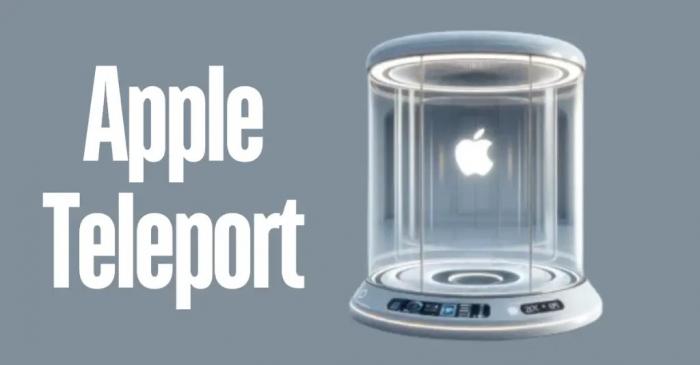
The technical Apple Teleport requirements for Apple Teleport would be staggering, requiring advances in several key areas that Apple has been quietly developing for years. At its core, the system would need to capture, compress, transmit, and reconstruct three-dimensional human presence in real-time with minimal latency. This isn’t just about video calling – it’s about creating a convincing illusion that someone is physically present in a space they’ve never visited.
Apple’s investment in LiDAR technology across their device lineup provides a crucial foundation for this capability. The LiDAR sensors can create detailed depth maps of environments, allowing the system to understand spatial relationships and place digital avatars convincingly within real spaces. Combined with the company’s advanced camera systems and computational photography capabilities, Apple could theoretically capture enough visual information to create photorealistic representations of users and their immediate surroundings.
The networking requirements would be equally demanding. Apple Teleport would need to transmit massive amounts of spatial and visual data with imperceptible delay. This is where Apple’s work on custom silicon becomes crucial. The company’s M-series and A-series processors, with their dedicated Neural Engine components, could handle the real-time processing required for spatial mapping, avatar generation, and environmental understanding without overwhelming the device’s resources.
Machine learning would play a central role in making the experience feel natural and responsive. The system would need to predict user movements, understand gestures and expressions, and adapt to different lighting conditions and environments. Apple’s on-device machine learning capabilities, developed for features like Face ID and computational photography, provide a strong foundation for these requirements.
Current Apple Technologies Paving the Way
Apple hasn’t been sitting idle while dreaming up futuristic teleportation concepts. Several existing Apple technologies already demonstrate elements that could contribute to an Apple Teleport system. Understanding these current capabilities helps illustrate how the company might approach such an ambitious project.
The Vision Pro headset represents Apple’s most direct step toward spatial computing and mixed reality experiences. Its ability to blend digital content with real environments, track hand movements, and create immersive experiences showcases many of the fundamental technologies that would be necessary for teleportation. The device’s external cameras and internal sensors create a detailed understanding of both the user and their environment, which are essential components for projecting presence elsewhere.
FaceTime has evolved far beyond simple video calling, incorporating features like SharePlay, which allows users to share experiences across distances. The technology behind FaceTime’s spatial audio, which creates the illusion that voices come from specific directions, demonstrates Apple’s understanding of how to create convincing remote presence. Recent additions like Center Stage, which automatically keeps users in frame during video calls, show how AI can enhance the feeling of natural interaction across distances.
AirDrop’s seamless file sharing between nearby Apple devices illustrates the company’s expertise in device-to-device communication. While transferring files is far simpler than transmitting full spatial presence, the underlying technologies for device discovery, secure connections, and efficient data transfer would all be relevant to an Apple Teleport system.
Potential Applications and Use Cases
The applications for Apple Teleport technology would be limited only by imagination and technical constraints. In professional settings, the technology could revolutionize remote work by allowing colleagues to collaborate as if they were in the same room. Imagine architects walking through digital building models together, or surgeons consulting on procedures with experts from around the world appearing as if they were standing right beside the operating table.
Education represents another compelling use case. Students could take virtual field trips to historical sites, museums, or scientific facilities without leaving their classrooms. Language learning could be enhanced by conversing with native speakers who appear to be sitting across the table. Complex subjects like a